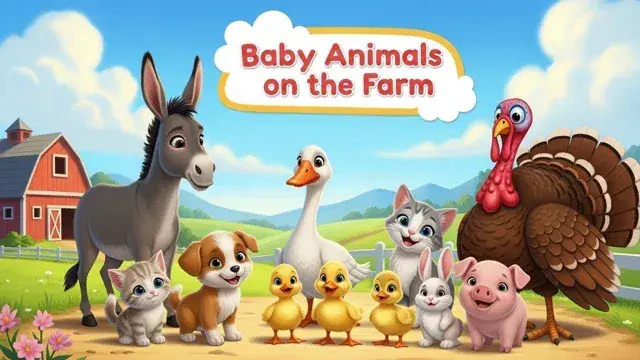
Hello, Baby Animals! – Meet the Farm's Youngest Residents
Meet adorable baby animals on the farm! Discover calves, lambs, chicks and foals in this warm animated story about farm animal families — for children aged 2–7.
About This Video
The farm in April is the busiest, most joyful place in the world: a ewe has twin lambs still on shaky legs, a cow is nudging her newborn calf to its feet, a goat is feeding three kids at once, a sow is nursing a row of tiny piglets, a mare is nuzzling the foal that arrived just this morning, and in the barn a broody hen is sitting very still and very important over a clutch of eggs that might hatch today. This animated farm story introduces every major baby farm animal with its own name and its first days of life.
Perfect for children aged 2 to 7 who love farm animals. Most powerful before a farm visit during lambing season in spring. After watching, test the baby animal names — a baby goat is a kid, a baby deer is a fawn, a baby cat is a kitten — how many can your child remember? Free to watch.
All videos on Little Story World are completely free — no account required, no subscription needed. Browse 120+ free animated stories, songs and science adventures for children aged 2 to 7.
Parents' Questions
Which baby farm animals appear in the Hello Baby Animals story and what are their names?
This farm story introduces every major baby animal with its correct name — lamb (baby sheep, often born in pairs or triplets in April), calf (baby cow, able to stand and walk within hours of birth), kid (baby goat — the word for a baby goat is the same word we use colloquially for a human child, which delights children when they notice), foal (baby horse, able to gallop within hours), piglet (baby pig, born in large litters — a sow can have twelve piglets in a single birth), chick (baby chicken, hatched from eggs and covered in yellow down), duckling (baby duck), and gosling (baby goose).
Is Hello Baby Animals a good video to watch before a farm visit in spring?
This video is most powerful when watched in the days before a spring farm visit during lambing or calving season. Children arrive knowing the correct names for every animal they see and understanding that what looks like a wobbly accident is actually a perfectly timed developmental milestone: foals stand within an hour because in the wild they need to run from predators within their first day. Many farm centres run lambing viewings in late winter and early spring — children who have watched this story arrive armed with knowledge, questions and a deep emotional connection to what they are watching.
What age is the Hello Baby Animals farm story designed for?
Designed for children aged 2 to 7. Two to three year olds are instantly captivated by the baby animals — the lamb on shaky legs, the row of tiny piglets, the foal too big and leggy for its own coordination. Children aged 4 to 7 absorb all the correct baby animal names and love testing adults on them: 'Do you know what a baby goose is called?' (A gosling.) One of the most emotionally warm videos in the collection — the combination of tiny fragile animal lives and their first days of extraordinary stubborn vitality is genuinely moving at any age.