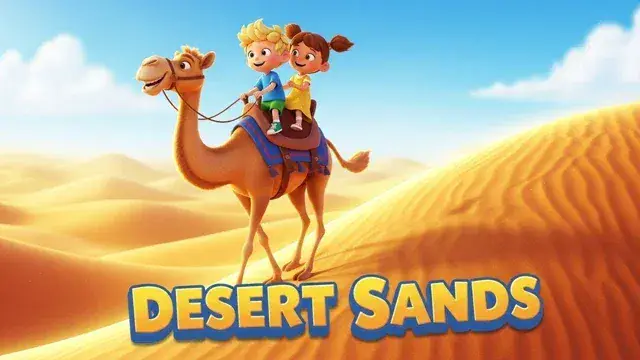
Life in the Desert – Animals & Plants That Survive Without Water
Explore the surprising life thriving in the desert! Discover cacti, camels, lizards and scorpions in this eye-opening animated nature story for children aged 2–7.
About This Video
In the Sahara, midday temperatures reach 50 degrees Celsius on bare sand — and yet the desert is full of life. A fennec fox shelters in a deep burrow during the lethal midday heat, emerging at dusk with enormous ears that radiate excess body heat. A sidewinder rattlesnake moves across the sand in a distinctive sideways loop to minimise heat contact. A cactus stores a year of rainfall in its fleshy stems. A camel drinks 100 litres at once and stores fat (not water) in its hump. The desert is not empty — it is a masterclass in adaptation.
Perfect for children aged 2 to 7 curious about extreme environments and animals. After watching, visit a desert biome in a botanical garden or zoo with a desert dwelling section — children arrive knowing which adaptations to look for and why each one is so clever. Free to watch.
All videos on Little Story World are completely free — no account required, no subscription needed. Browse 120+ free animated stories, songs and science adventures for children aged 2 to 7.
Parents' Questions
What desert animals and plants does the Life in the Desert animated story show?
This desert ecology story features the fennec fox (enormous ears for radiating heat, nocturnal to avoid the worst temperature, digs deep burrows as insulated shelter), the dromedary camel (a single-humped camel storing fat in the hump — not water — and able to drink 100 litres in ten minutes to rehydrate), the sidewinder rattlesnake (moves sideways to minimise ground contact on scalding sand), the Addax antelope (never drinks — gets all water it needs from desert plants), the roadrunner bird and the saguaro cactus (accordion-pleated stem expands to store water after rain, losing it slowly over months).
Does this desert animals video help children understand what adaptation means?
Yes — the word 'adaptation' means the specific features of an animal or plant that suit it to its environment, and the desert is the most dramatic place to see it. Every animal in this video has specific adaptations for extreme heat and scarce water. After watching, ask your child: 'Why do you think the fennec fox has such enormous ears?' 'What would happen to our skin if we had no water for a week?' 'If you had to live in the desert, which animal's superpower would you most want to borrow?' These questions develop biological thinking and creative scientific reasoning simultaneously.
What age is the Life in the Desert animals and plants story suitable for?
Designed for children aged 2 to 7. Young children are fascinated by the extreme facts — 50-degree temperatures, 100 litres of water drunk in one go, a snake moving sideways. Children aged 5 to 7 engage with adaptation as a concept and begin connecting it to other animals they know: 'A polar bear is adapted to cold the way a camel is adapted to hot.' Visiting a zoo reptile house or botanical garden cactus section after watching gives children the opportunity to see desert adaptations in real life.