Feathers or Fur? – What Makes Birds & Mammals Different
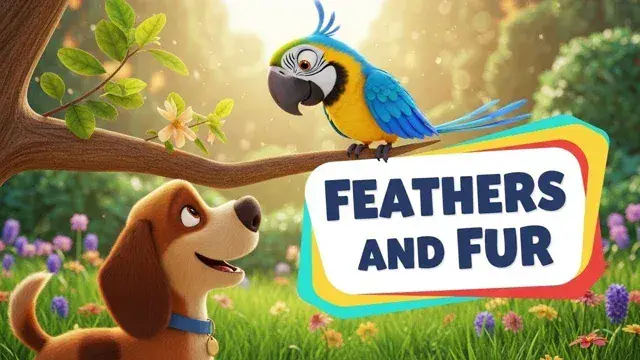
Discover what makes birds and mammals different in this engaging animated animal story! Feathers, fur, eggs and live birth — animal science made simple for kids aged 2–7.
About This Video
What is the difference between a bird and a mammal? This science story works through the key features of each group side by side: birds have feathers, beaks, hollow bones and lay hard-shelled eggs — even ostriches and penguins who cannot fly are unambiguously birds. Mammals have fur or hair, give birth to live young (with the surprising exception of the platypus) and nurse their babies with milk — even bats that fly and dolphins that swim are firmly mammals. The edge cases are the most fascinating part.
Perfect for children aged 2 to 7 starting to classify animals. After watching, play a sorting game using toy animals or picture cards — birds in one group, mammals in another. Then introduce the tricky cases: bat (flies but mammal), penguin (cannot fly but bird), dolphin (lives in the sea but mammal). Free.
All videos on Little Story World are completely free — no account required, no subscription needed. Browse 120+ free animated stories, songs and science adventures for children aged 2 to 7.
Parents' Questions
What features define birds versus mammals in this science story for kids?
This animal classification story clearly defines both groups. Birds: feathers (even fluffy baby feathers are feathers, not fur), a hard beak with no teeth, hollow lightweight bones for flight (including non-flying birds), and hard-shelled eggs laid outside the body. Mammals: fur or hair covering the body (even sparsely in some), warm-blooded, give birth to live young (except the platypus and echidna who lay soft-shelled eggs), and feed babies with milk from the mother's body. Every mammal — from the tiniest shrew to the blue whale — feeds its young with milk, which is the most reliable defining feature.
What are the surprising edge cases that this birds vs mammals video explores?
The most interesting part of the story is the exceptions that test the rules. Penguins are clearly birds despite being flightless swimmers. Bats are clearly mammals despite being the only mammals capable of powered flight. Dolphins and whales are mammals despite living entirely in the sea — they breathe air, give birth to live young and nurse their calves. The platypus is a mammal that lays eggs. These edge cases are not mistakes in the classification system — they reveal that evolution can produce the same solution (swimming, flying) in very different animal groups.
What age is Feathers or Fur? the birds vs mammals story suitable for?
Designed for children aged 2 to 7. Young children aged 2 to 4 enjoy sorting the visual categories — soft fur versus smooth feathers is a satisfying tactile distinction that works in real life too. Children aged 5 to 7 engage with the classification system and love the surprising cases — is a bat a bird or a mammal? What about a penguin? Playing a simple sorting card game after watching turns the classification knowledge into active, tested, memorable understanding.