Find Every Hidden Vegetable! – A Name & Spot Quiz for Kids
Carrots, peas, tomatoes and more are camouflaged! This animated search quiz teaches vegetable names for children aged 2–7.
About This Video
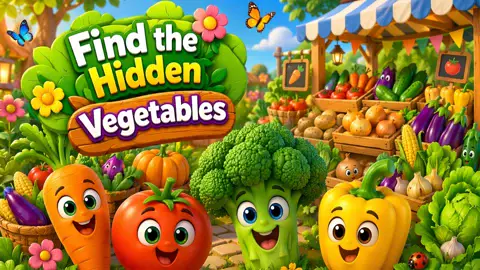
A lush kitchen garden scene is hiding carrots, broccoli, peas, tomatoes, courgettes, peppers, cauliflower, aubergine and more — each vegetable blended into the scene so cleverly that even sharp young eyes need to search methodically to find them all. As each vegetable is discovered, its name is spoken clearly and its hiding spot celebrated — turning the hunt for vegetables into the most satisfying game a young foodie can play.
Perfect for children aged 2 to 7 building vegetable vocabulary or working on picky eating habits. Research consistently shows that children who can name more vegetables are more willing to try them — familiarity reduces food anxiety. After watching, visit the vegetable section of a supermarket together and challenge your child to find every vegetable from the game. Ask: 'Which one do you think you'd most like to taste?' Free to watch with no account needed.
All videos on Little Story World are completely free — no account required, no subscription needed. Browse 120+ free animated stories, songs and science adventures for children aged 2 to 7.
Parents' Questions
Which vegetables are hidden in the search and find vegetable game?
The vegetable seek-and-find game features a wide garden range: carrot (orange and distinctively tapered), broccoli (dark green with a cloud-like texture), tomato (red and round, hidden among red berries and flowers), pea pods (long and green, hidden among leaves), pepper (red and yellow versions), courgette (long and green, hidden among cucumber shapes), cauliflower (white and dense), aubergine (deep purple and smooth), sweetcorn (yellow and cylindrical), onion (brown and round) and more. Each vegetable's distinctive colour or shape provides the essential visual clue children use to find it among the camouflaged scene.
Can this vegetable game help with picky eating in young children?
Yes — and the mechanism is well supported by research on food neophobia in children. Children often resist unfamiliar vegetables not because of taste alone but because of visual and conceptual unfamiliarity — the vegetable is a stranger, and strangers are approached with caution. Building confident naming knowledge through a beloved, repeated game makes each vegetable a familiar friend before it appears on a plate. Parents and early years practitioners consistently report that children who can name and 'hunt for' a vegetable in a game are significantly more willing to taste it when offered at mealtimes.
What age is the Find Hidden Vegetables search game suitable for?
Designed for children aged 2 to 7. Two to three year olds love identifying the bright colours — the red tomato, the orange carrot — and calling out names enthusiastically. Children aged 4 to 7 tackle the subtler camouflage of the green vegetables (courgette among leaves, pea pods among stems) with increasing systematic skill. Frequently used in nursery and Reception classrooms during garden and healthy eating topic weeks. An excellent companion to gardening activities — children who have played the game are far more interested in real vegetables growing in a plot or pot.