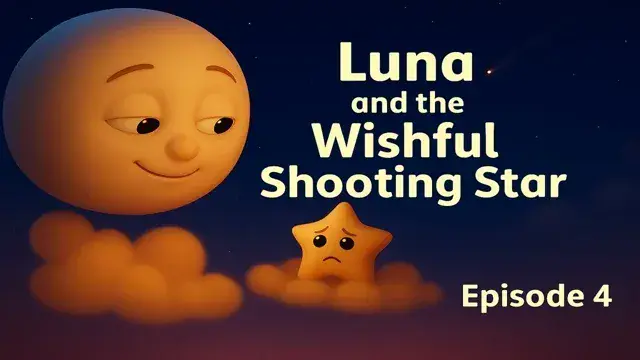
One Wish for a Shooting Star – Luna's Night Sky Dream
Close your eyes and make a wish with Luna and a magical shooting star! This enchanting animated bedtime story brings the joy of wishing and dreaming to children aged 2–7.
About This Video
Three times in one night, Luna watches a shooting star cross the sky — each one faster and fainter than it seems it should be for something so rare and so awaited. Traditional wisdom says you must make a wish before the shooting star is gone. Three stars, three wishes, three quiet moments of decision in a dark garden. This Luna's Moonlight Tale is about what children wish for when they are given the specific, brief opportunity to wish for absolutely anything: not the expected things, but the real things, and what those wishes reveal about the person making them.
Perfect for children aged 2 to 7 who love the night sky and wishing. After watching, discuss: 'If you saw a shooting star tonight, what would you wish for? Would you tell anyone or would you keep it secret?' Free to watch with no account.
All videos on Little Story World are completely free — no account required, no subscription needed. Browse 120+ free animated stories, songs and science adventures for children aged 2 to 7.
Parents' Questions
What are shooting stars and does this story explain them to children?
The story gently explains that shooting stars are not stars at all — they are tiny pieces of space rock and dust called meteors, burning up in the Earth's atmosphere as they fall. The immense speed at which meteors enter the atmosphere (between 11 and 72 kilometres per second) generates such intense heat through air compression that the surrounding air glows — creating the brief, bright trail we see as a shooting star. Most meteors are no larger than a grain of sand. The ones that survive the atmosphere and reach the ground are called meteorites. On clear nights away from city light, several shooting stars are visible per hour, with dozens during annual meteor showers.
Does the story explore what children might wish for if they saw a shooting star?
This is the heart of the story — what Luna actually wishes for is not what she expected to wish for, and the wishes reveal something about what she values most at this particular moment in her life. The story invites children to consider the same question: given a genuine wishing moment with no rules and no judgment, what would they actually choose? The question is more interesting and more revealing than it appears — what children wish for at ages 4 to 7 is often something beautifully specific, surprisingly unselfish and genuinely telling about what matters to them right now. After watching, ask: 'What would your three wishes be?'
What age is One Wish for a Shooting Star Luna story designed for?
Designed for children aged 2 to 7. Young children aged 2 to 4 love the visual of the shooting stars crossing the sky and the magical permission to wish. Children aged 5 to 7 engage with the wish question thoughtfully — their answers are consistently more interesting and more revealing than adults expect. The story works as a bedtime conversation starter that is among the warmest available: the shooting star creates a safe, magical frame for children to articulate their real hopes and values without the self-consciousness that a direct question might produce.