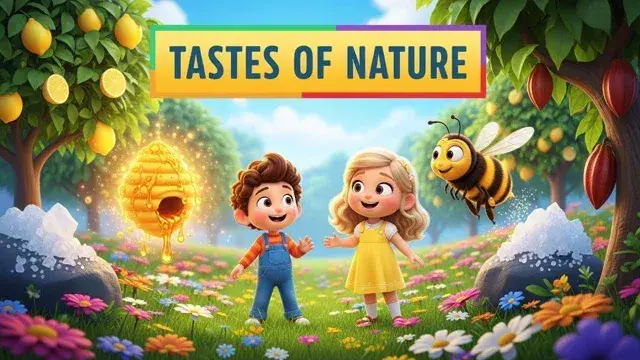
Sweet, Salty, Sour or Bitter? – Exploring the Science of Taste
Go on a delicious sensory journey exploring sweet, salty, sour and bitter tastes! This animated story teaches children about the fascinating science of taste and food aged 2–7.
About This Video
Your tongue is covered in taste buds — between five and ten thousand of them — each sensitive to one of the basic taste categories. This science story explores each taste through the foods that best represent it: sweet (honey, ripe mango, chocolate), salty (a crisp, a chip, a piece of cheese), sour (lemon juice, vinegar, unripe apple), and bitter (dark chocolate, coffee, raw broccoli). Children discover why we like sweet and salty things instinctively (they signal energy and minerals) and dislike bitter things instinctively (many poisons are bitter).
Perfect for curious children aged 2 to 7 interested in food and flavour. Set up a simple tasting table at home — a small sample of something sweet, salty, sour and bitter — and identify each taste after watching. Lemon slice, honey, a plain cracker and dark chocolate covers all four. Free.
All videos on Little Story World are completely free — no account required, no subscription needed. Browse 120+ free animated stories, songs and science adventures for children aged 2 to 7.
Parents' Questions
What are the four basic tastes and which foods in this video represent each one?
This taste science story introduces sweet (the taste of sugars — honey, ripe mango, dark chocolate, sweet cherry tomato — and the flavour all mammals seek instinctively because it signals calories and energy), salty (the taste of sodium — a crisp, a piece of parmesan cheese, soy sauce — signalling essential minerals our bodies need), sour (the sharp taste of acids — lemon juice, vinegar, yoghurt, unripe banana — often signalling food that is fermenting and therefore potentially both dangerous and nutritious), and bitter (the taste of alkaloids — dark chocolate, coffee, raw broccoli — which evolution wired babies to reject because many plant poisons are bitter).
Why do young children often dislike bitter and sour foods, does the video explain this?
Yes — and the explanation often surprises parents because it validates rather than dismisses children's taste preferences. Young children have more taste buds than adults, making everything taste more intense. More importantly, human babies are wired by evolution to reject bitter foods (because many poisons taste bitter) and to accept sweet foods (because sweet tastes signal safe natural sugars). As children grow and safely encounter more bitter foods without harm, the brain gradually reduces the rejection response. This means children who try bitter foods regularly in small amounts often develop tolerance and eventually appreciation as they grow.
What tasting experiment works best after watching the Sweet, Salty, Sour or Bitter video?
Set up a tasting flight: put a tiny sample of something representing each of the four tastes on separate spoons. Honey (sweet), a small pinch of sea salt (salty), a drop of lemon juice on a teaspoon (sour), a small square of 70% dark chocolate (mildly bitter). Taste each slowly, name the taste before checking against the video. Then try mixing: what does honey mixed with a pinch of salt taste like? (The answer is: caramel-like and somehow better than either alone — this is why salted caramel became so popular.) For children aged 2 to 7, the tasting experiment is the most immediately vivid science activity available.