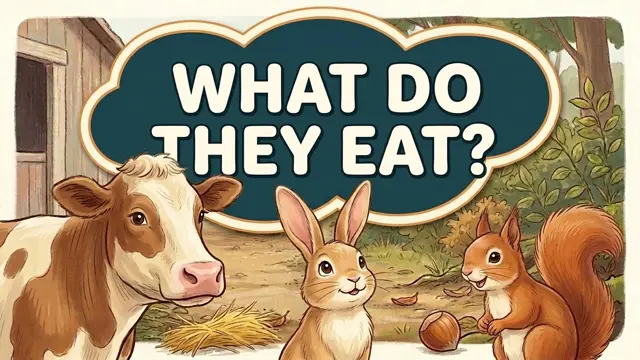
What Do Animals Eat? – 15-Animal Food Guessing Game for Kids
Grass, hay, nectar or seeds? Open an illustrated nature notebook and guess what 15 farm, garden, pond and woodland animals love to eat — for curious kids aged 2–7.
About This Video
Open a charming illustrated nature notebook where paper flaps lift to reveal favourite animal meals! Travelling gently from the farmyard to the garden, pond and woodland, children meet fifteen familiar animals — from cows, sheep and rabbits to bees, frogs, squirrels and hedgehogs — with two calm seconds to think and guess before each food flap opens.
Thoughtfully paced for children aged 3 to 6 (and enjoyed across ages 2 to 7), this calm guessing game builds animal and food vocabulary without noisy timers or overstimulation. Families and teachers can pause before each paper flap lifts so children can explain why they chose grass, hay, seeds or nectar. Free to watch with no account needed.
All videos on Little Story World are completely free — no account required, no subscription needed. Browse 141+ free animated stories, songs and science adventures for children aged 2 to 7.
Parents' Questions
Which 15 animals appear in the What Do Animals Eat guessing game?
The illustrated notebook journey introduces fifteen everyday animals across four nearby habitats — farm, garden, pond and woods: cow, horse, sheep, goat, rabbit, hen, snail, butterfly, bee, duck, frog, squirrel, deer, blackbird and hedgehog. Starting with animals children can actually spot on a country walk, farm visit or back garden makes the link between screen learning and real-world nature observation immediate.
Why does the video give a calm two-second thinking pause before each answer?
Young children aged 2 to 7 process visual clues and retrieve words more slowly than adults. Fast-paced quiz videos often blurt out the answer before a preschooler has finished looking, turning active thinking into passive watching. A gentle two-second pause gives children just enough time to point or call out their guess — and because the notebook reminds viewers that each food is one typical example rather than an animal's only meal, it builds accurate scientific thinking from the start.
How can parents and nursery teachers extend this animal food game?
On your next walk in a park, garden or farm, bring a small 'nature detective notebook' of your own. Whenever you spot a bird, bee, duck, snail or squirrel, ask your child: 'What do you think it's looking for to eat right here?' Looking for clover, seeds, blossom nectar or pond plants turns an ordinary walk into a real ecology treasure hunt.