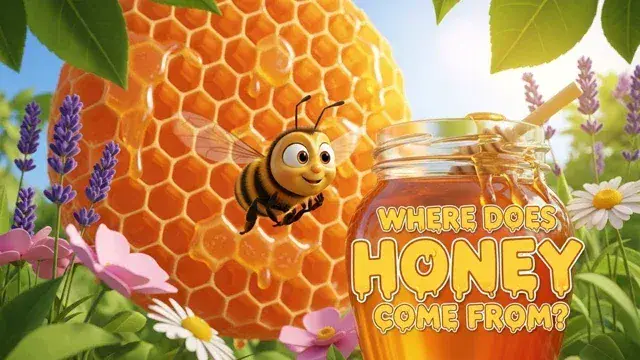
From Bee to Jar – The Sweet Journey of Honey Explained
Where does golden honey really come from? Follow the full journey from flower meadow to beehive to breakfast jar in this sweet animated discovery story for kids aged 2–7.
About This Video
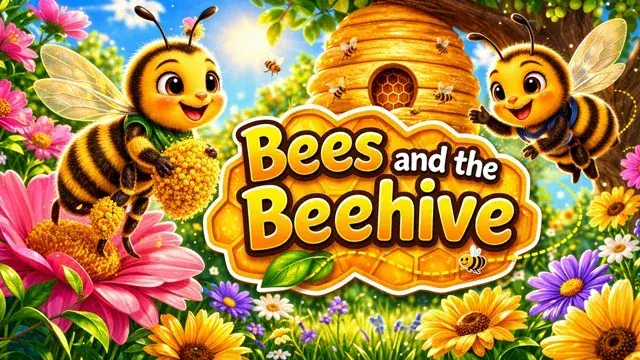
A jar of supermarket honey has travelled an extraordinary distance before reaching your kitchen. This animated story follows the honey's complete journey: the bee flies to wild flowers and collects nectar in a special honey stomach (separate from its food stomach), carries it back to the hive and passes it mouth-to-mouth to a house bee, who evaporates excess water by fanning it with her wings, then seals the concentrated honey under a wax cap. The beekeeper inspects frames, identifies the capped honey cells, removes full frames, uncaps them with a hot knife and spins them in a centrifuge until liquid gold pours out.
Perfect for children aged 2 to 7 who want to know where honey comes from. After watching, visit a local farmers market and find a beekeeper with raw honey — taste different varieties and ask which flowers the bees visited. Free to watch with no account needed.
All videos on Little Story World are completely free — no account required, no subscription needed. Browse 120+ free animated stories, songs and science adventures for children aged 2 to 7.
Parents' Questions
What is the complete journey from flower to jar in this honey story?
This honey journey story covers every step. The bee flies from the hive to flowers (travelling up to 8 kilometres per trip and visiting up to 1,500 flowers to fill one honey stomach). She returns, regurgitates the nectar and passes it to a house bee in the hive. The house bee fans it with her wings for hours to evaporate excess water, concentrating the nectar from 80% water content to about 20%. When the moisture is low enough, she seals the cell with white wax. The beekeeper identifies full frames by the wax capping, removes them, slices off the wax cap with a warm knife, and spins the frames in a centrifuge. Honey pours out into a tank where it settles before being jarred.
How does this honey video connect to tasting different types of honey at home?
Different flowers produce dramatically different flavours of honey, and the video explains why. Acacia honey is clear and very lightly sweet. Heather honey is darker and more intensely floral. Orange blossom honey from Mediterranean orange groves has a faint orange fragrance. Clover honey is the classic pale liquid gold. Manuka honey from New Zealand is thick, dark and strongly flavoured. After watching, buy two or three different flower honeys from a farmers market or specialist food shop, taste them side by side on a teaspoon and discuss the differences. The honey-tasting is the most immediately sensory extension of this video's journey.
What age is From Bee to Jar honey story designed for?
Designed for children aged 2 to 7. Young children are captivated by the visual of honey pouring out of the centrifuge in a golden stream. Children aged 5 to 7 follow the complete process and are consistently surprised by how many bees and how many flower visits are needed to produce one jar: approximately 60,000 bee trips visiting 2 million flowers for 500 grams of honey. That fact alone transforms every jar of honey from a background condiment into a genuinely remarkable object worthy of careful attention and deep appreciation.