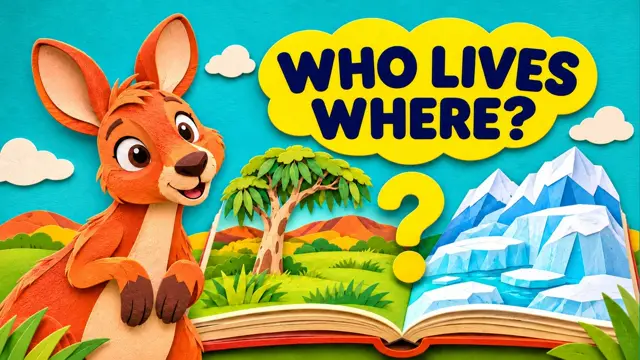
Who Lives Where? – Match 10 Animals to Their Natural Habitats
Explore a pop-up paper world map and choose the right home for 10 animals — pandas, koalas, sloths, fennec foxes, snow leopards and more for children aged 2–7!
About This Video
Unfold a magical pop-up paper journey map and travel across the globe to match ten amazing animals with the landscapes they call home! In every round, two paper-crafted habitats pop open side by side — giving children ages 2 to 7 time to look closely, name each environment and choose where the animal belongs before the scene comes alive.
From a giant panda in misty mountain bamboo forests and a fennec fox in Sahara sand dunes to a sloth in the rainforest canopy, a river otter and a high-mountain snow leopard, this interactive habitat game builds geography and wildlife knowledge for home or classroom play. Free to watch with no account needed.
All videos on Little Story World are completely free — no account required, no subscription needed. Browse 141+ free animated stories, songs and science adventures for children aged 2 to 7.
Parents' Questions
Which 10 animals and habitats are featured in Who Lives Where?
The pop-up world journey map opens ten distinct habitat scenes across the planet: a wolf among woodland trees, a dromedary camel in a hot dry desert, a giant panda in a mountain bamboo forest, a red kangaroo on open Australian plains, a koala in eucalyptus woodland, a sloth high in the rainforest canopy, a tiger in an Asian forest, an otter beside a flowing river, a big-eared fennec fox in the Sahara desert, and a snow leopard high on rocky mountain peaks.
What geography and biology skills do children build by comparing two landscapes?
Comparing two contrasting paper landscapes side by side prompts children to read visual environmental clues — thick snow versus dry sand dunes, tall bamboo stems versus open grassland, riverbanks versus rainforest treetops — and connect them to how an animal's body lives and moves. Just like good classroom science, the video notes that each habitat shown is a typical example rather than the single place a species can ever live.
How can parents and teachers play along with Who Lives Where at home or in class?
Before the reveal in each round, pause briefly and ask children two quick questions: 'What two places can you see?' (naming desert, river, mountains, forest or plains) and 'What clue on the animal's body helps it live there?' — such as the snow leopard's thick coat for icy peaks, the otter's sleek body for swimming, or the sloth's long curved claws for hanging in rainforest branches.