Rocks Are Amazing! – Discovering the World of Geology for Kids
Explore the incredible world of rocks and minerals! Discover igneous, sedimentary and metamorphic rocks in this engaging animated Earth science story for kids aged 2–7.
About This Video
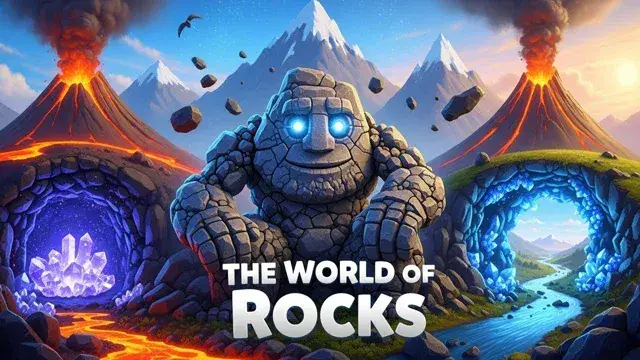
Every rock you pick up from the ground has a story that begins millions or even billions of years ago. This earth science story introduces the three main rock families: igneous rocks (formed when liquid magma cools — basalt forms in days from lava flow, granite takes millions of years to cool deep underground and ends up as countertops and paving stones), sedimentary rocks (compressed layers of ancient sand, mud and shell fragments — limestone is often full of fossil shells) and metamorphic rocks (rocks transformed by enormous heat and pressure underground — limestone pressed in mountain-building becomes marble).
Perfect for children aged 2 to 7 who love collecting, geology or nature. Start a rock collection from different locations — beach, garden, river, woodland path — and examine each with a magnifying glass. Use a pocket rock guide to identify types. Free to watch with no account.
All videos on Little Story World are completely free — no account required, no subscription needed. Browse 120+ free animated stories, songs and science adventures for children aged 2 to 7.
Parents' Questions
What are the three types of rocks and how does each one form, according to this video?
This rocks and geology story explains the complete rock cycle through three families. Igneous rocks form when molten magma cools — obsidian cools so fast it becomes volcanic glass, granite takes millions of years cooling deep underground in huge crystals. Sedimentary rocks form in layers from compressed particles: limestone from ancient sea shells, sandstone from compressed desert or river sand, coal from compressed prehistoric swamp plants. Metamorphic rocks are existing rocks transformed by heat and pressure: marble is limestone that was caught in a mountain-building event and cooked into a crystalline structure suitable for famous statues.
How can children start a geology collection after watching this rocks science video?
Collect five to ten interesting pebbles from different locations on a walk — variety is more interesting than quantity. At home, set each rock on a white surface and examine with a magnifying glass. What colours are in it? Can you see individual crystals? Is it shiny or dull, rough or smooth, heavy or light? Try scratching one rock with a fingernail — if it scratches it is very soft (mineral hardness 2 or less). Drop a few drops of white vinegar on it — if it fizzes, it probably contains calcium carbonate and is limestone. These simple tests turn pebbles into data.
What age is the Rocks Are Amazing earth science story designed for?
Designed for children aged 2 to 7. Young children love the visual drama of sparkling crystals in granite, the rich purple of amethyst and the fact that coal is made of ancient trees. Children aged 5 to 7 engage with the rock cycle concept and begin classifying their own collections. Rock collecting is one of the most accessible, free and enduringly fascinating nature hobbies available to children — every beach, garden path or building wall contains geological stories once you know what to look for.