Spot Every Hidden Vowel! – A, E, I, O, U Phonics Search Game
A, E, I, O and U are hiding in colourful scenes! Can your child spot each hidden vowel? A playful phonics and letter recognition game for children aged 2–7.
About This Video
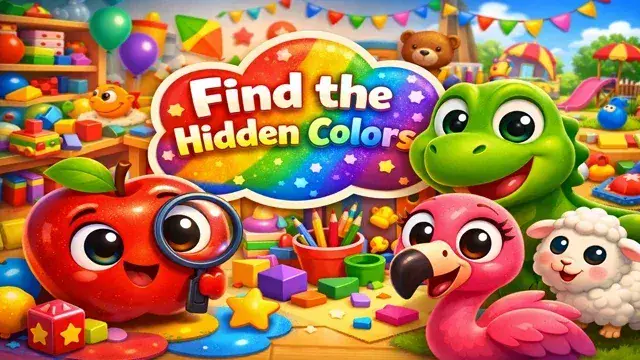
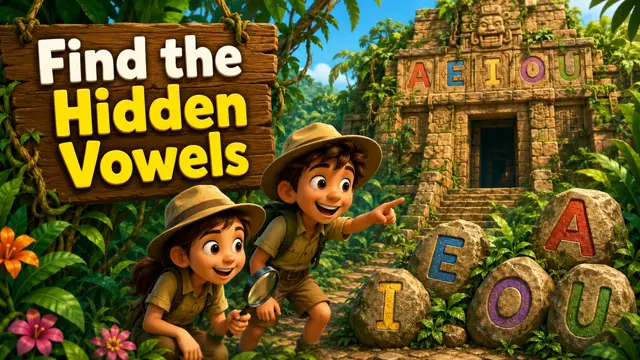
Five special letters unlock almost every word in English — A, E, I, O and U! In this colourful phonics seek-and-find game, each vibrant illustrated scene hides one target vowel cleverly blended among shapes, objects and other letters. Children scan carefully, spot the hidden vowel before the reveal, and hear its letter name and sound celebrated clearly.
Designed for children aged 2 to 7 taking their first steps into alphabet recognition and early phonics. Focusing specifically on the five vowels makes letter spotting far less overwhelming than tackling all 26 letters at once. After watching, play a vowel hunt on cereal boxes, street signs or favourite picture-book covers together. Free to watch with no account needed.
All videos on Little Story World are completely free — no account required, no subscription needed. Browse 141+ free animated stories, songs and science adventures for children aged 2 to 7.
Parents' Questions
Which vowels do children search for in this phonics seek-and-find game?
Children search for all five core English vowels — A, E, I, O and U — across bright, playful scenes where each target vowel is camouflaged among other letters and background details. Isolating the five vowels gives young learners a manageable, high-impact literacy goal: because nearly every English syllable contains a vowel, recognising A, E, I, O and U visually gives children an immediate head start when they begin blending CVC words like 'cat', 'pen', 'pig', 'dog' and 'sun' in Reception.
How does a visual search game help with early phonics and reading readiness?
Early reading depends on two linked skills: phonological awareness (hearing sounds) and visual letter discrimination (telling similar letter shapes apart, such as O and Q or E and F). A seek-and-find format trains visual discrimination naturally because children actively scan curves, lines and openings to verify they have found the exact vowel rather than a look-alike letter. Pairing the moment of visual discovery with clear spoken letter naming creates strong memory anchors without worksheet pressure.
What age is the Find the Hidden Vowels game suitable for?
Ideal for children aged 2 to 7. Two and three year olds enjoy spotting bold letter shapes like round O and pointed A alongside a parent. Four to five year olds in nursery and Reception use the game to consolidate vowel names and connect them to short vowel sounds. Older children aged 5 to 7 love racing the reveal timer and challenging themselves to think of a word starting with each vowel as soon as they spot it.