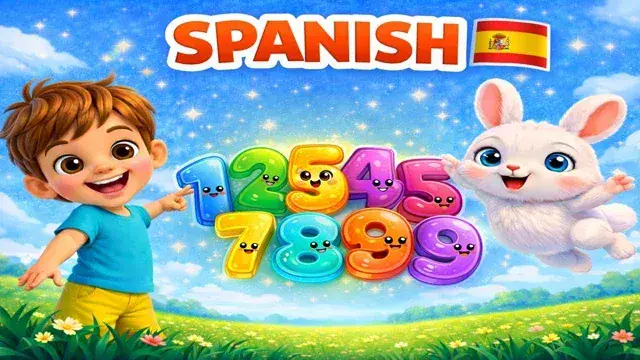
Uno, Dos, Tres! – Learn Spanish Numbers 1 to 9 with Music
Count 1 to 9 in Spanish with this fun animated number song! A perfect bilingual introduction for families raising multilingual children or curious kids aged 2–7.
About This Video
Uno, dos, tres, cuatro, cinco, seis, siete, ocho, nueve — nine numbers in Spanish, introduced one at a time through a lively song with animated Latin American fiesta visuals: maracas shaking on one, a butterfly landing on two, three flamingos dancing, four sunflowers turning, five stars twinkling, six waves on the sea, seven parrots on a branch, eight fish jumping, nine hot air balloons rising. The rhythm of Spanish numbers is genuinely beautiful — and children pick up the sounds far faster than adults expect.
Perfect for children aged 2 to 7 having a first introduction to Spanish. After watching, count objects around the house in Spanish — uno spoon, dos socks, tres books. Early language exposure at this age is absorbed effortlessly. Free to watch with no account needed.
All videos on Little Story World are completely free — no account required, no subscription needed. Browse 120+ free animated stories, songs and science adventures for children aged 2 to 7.
Parents' Questions
Which numbers in Spanish does this song teach and how is each number introduced?
Uno, Dos, Tres teaches the Spanish numbers one to nine through a lively animated song. Each number is introduced with its Spanish name, the numeral on screen, and a matching group of objects or animals — uno mariposa (one butterfly), dos flamingos (two flamingos), tres girasoles (three sunflowers), cuatro estrellas (four stars), cinco olas (five waves), seis loros (six parrots), siete peces (seven fish), ocho globos (eight balloons), nueve soles (nine suns). The Latin American cultural context — bright colours, fiesta imagery, salsa rhythm — makes the whole experience feel like a genuine cultural encounter rather than simply a counting exercise.
Why is watching this Spanish counting song good for children even if they are not learning Spanish?
Children aged 2 to 7 are in the maximum sensitive period for language acquisition — their brains are literally wired to absorb new language patterns effortlessly during this window in a way that adults cannot replicate. Exposure to Spanish number names at this age does not require formal study: the sounds, rhythms and patterns are absorbed simply through enjoyable repetition. Children who learn to count in Spanish easily remember the sounds well into adulthood even without further study. Early multilingual exposure also develops phonological flexibility — the ear's ability to distinguish sound patterns that do not exist in the native language.
What age is the Learn to Count in Spanish 1 to 9 song designed for?
Designed for children aged 2 to 7. Two to four year olds absorb the musical sounds of Spanish numbers effortlessly through repeated singing. Children aged 5 to 7 use the number words in counting games and begin connecting them to written Spanish numerals. For maximum absorption, count objects around the house in Spanish immediately after watching and revisit the song regularly — once every few days for a month is enough for most children aged 3 to 6 to retain all nine numbers reliably. Also popular in nursery and primary classrooms for language diversity days and European Day of Languages events.